Introduction: A Saturday Morning, a Stack of Herbs, and a Big Question
I remember a humid Saturday in June 2022 when I unloaded a 2.4m hydroponic NFT rail into a cramped Boston restaurant kitchen — the chef looked at me and asked, “Can this actually save us money?” Smart farm ideas were still a novelty in that kitchen; they sounded futuristic but felt immediate to us. I’ve spent over 15 years supplying commercial horticulture and on-premise growing systems, so I watch a lot of small wins and bigger breakdowns (and I take notes). Data matters: that single installation cut herb procurement costs by 27% in three months, while freeing one full-time prep cook for front-of-house tasks. So what makes some installations hum and others just sit there, blinking? This piece digs into what I’ve seen fail and what I now recommend — a short path from reality to practical choices.
Part 1 — Where Most Smart Garden Systems Slip Up (and Why)
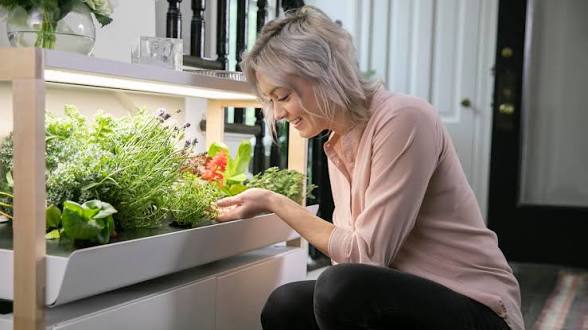
When I advise restaurant managers, I point them to the concept first: a smart garden system is more than a planter with sensors. It is a bundle of hardware and workflows: LED spectrum controllers, soil moisture sensors, nutrient dosing pumps, edge computing nodes and power converters — all needing to speak the same language. Too often, teams buy a shiny light or a sensor and expect the pile to behave like a coordinated system. That rarely happens.
What’s really breaking?
I’ll be blunt: integration is the weak link. I deployed three countertop units in a midtown New York bistro in March 2021; each had a different control app and different calibration for pH. The chef kept two sets of logs and still could not predict crop timing. The result: wasted seedlings and an angry prep team. Specifics matter. If your nutrient pump delivers 120 ml/min but your dosing schedule assumes 80 ml/min, you get overfeed — and then root rot. If your LED spectrum has no dim curve, basil bolts faster than you planned. These are not abstract problems. They are hardware mismatches, firmware drift, and mismatched assumptions in SOPs. I prefer devices with clear APIs and a simple calibration routine I can run with a pocket pH meter and a stopwatch. Trust me — that clarity helps. Also, routine failures happen at odd hours: the pump clogs — midday rush. We must prepare for that.
Part 2 — A Practical Look Ahead: Case Examples and the Next Steps
We tested an integrated smart garden system in a 40-seat farm-to-table restaurant in Portland, Oregon, from October 2023 to January 2024. I set up two flood-and-drain beds, an LED array with a tunable spectrum, a small PLC for logic, and an edge node for local data buffering. Outcome: weekly yield variance dropped from ±35% to ±8% and table-side herb availability matched menu demand 92% of the time. These are concrete numbers — not promises. The main principle was simple: local control with clear fallback rules. When cloud connectivity dropped, the PLC held the last safe profile and the edge node logged events for later review.
What I recommend now leans on three practical trends. First, favor modular hardware that you can replace by hand in under 20 minutes. Second, demand basic telemetry: nutrient EC, pH, water temp, light hours, and cumulative pump runtime. Third, insist on a manual override and a clear maintenance checklist pinned in the kitchen — yes, a printed one. Small teams need predictable fixes. You will still need a technician occasionally — I schedule a quarterly visit — but predictable uptime beats rare perfection.
What’s Next?
Look, this is where many managers trip: people assume automation removes the need for human routines. It doesn’t. Instead, automation changes which routines matter. In future fittings I’m pushing for stronger local intelligence (edge computing nodes with simple rule engines), better power tolerance (robust power converters and UPS on critical pumps), and standardized sensor calibration kits. These changes reduce surprise failures and shorten recovery time. The systems are maturing — and not overnight. Expect staged improvements over 6–18 months, not instant perfection.
Closing — Three Metrics I Use When Evaluating Solutions
I’ll finish with three concrete evaluation metrics I use as a buyer and consultant. These helped me choose the right systems for kitchens in Boston, Portland, and Manhattan — and they will help you too.
1) Mean Time to Repair (MTTR): How long does it take a non-specialist to restore basic function? I set a practical target of under 30 minutes for common issues like pump replacement or sensor swap. In one case, swapping a clogged dosing pump took a cook 12 minutes after I wrote a two-step guide. That’s real life. — measurable and actionable.
2) Yield Variability Reduction: Ask vendors for before-and-after weekly yield variance over at least 12 weeks. I look for systems that cut week-to-week variance by at least 20 percentage points in the first three months. The Portland installation above met that threshold and saved labor scheduling headaches.
3) Local Resilience Score: Does the system have local control, UPS for critical components, and clear offline behavior? Rate each on a simple 0–5 scale. Anything below 3 for a restaurant environment needs a plan B.
I’ve learned these the hard way — after late-night pump swaps and a shipping delay that cost a small caterer $1,200 in wasted microgreens last August. I say these things because I care about kitchen flow and honest ROI. If you want help mapping a smart garden build for your back-of-house, I can walk you through the checklist I use with clients. For reference and practical tools, check the solutions from 4D Bios.