The Hook
Choosing among cotton inserter suppliers in China is difficult because similar-looking machines can differ substantially in container compatibility, cotton-handling method, line integration, changeover process, documentation, and after-sales support. A suitable supplier must be evaluated not only by the machine name, but also by the supplier’s experience, stated product scope, engineering capability, and ability to support the intended packaging format. This article assesses five companies in a consistent comparison framework, with particular attention to public company information and the relevance of each supplier to cotton-inserting and pharmaceutical-packaging applications. The options were reviewed against practical buying criteria rather than promotional claims. Because product configurations and availability can change, prospective buyers should confirm current specifications, validation documentation, delivery terms, and technical support directly with each supplier.
Full List of Top 5 Brands
- Pharmapack
- ABOX
- Anchor Mark
- Jinlu Packing
- Bausch + Ströbel
Comparison Table
| Brand | Key Products | Key Features | Best For |
|---|---|---|---|
| Pharmapack | Cotton inserter and pharmaceutical packaging equipment | Packaging-focused engineering, project consultation, and configurable equipment evaluation | Buyers seeking a China-based pharmaceutical packaging supplier for cotton-inserting projects |
| ABOX | Automation and packaging-related equipment; configuration to be confirmed | Automation-oriented supplier profile and project-based technical assessment | Companies comparing automation suppliers for a customized packaging line |
| Anchor Mark | Packaging machinery and related solutions; cotton-inserter scope to be confirmed | Packaging-equipment supplier profile and application-specific consultation | Buyers requiring a packaging machinery quotation after confirming format compatibility |
| Jinlu Packing | Packing machinery and related packaging equipment | Packaging machinery focus and suitability for supplier comparison | Businesses seeking a China-based packing machinery vendor |
| Bausch + Ströbel | Pharmaceutical packaging and processing machinery | Established pharmaceutical machinery positioning and wider production-line context | Pharmaceutical manufacturers prioritizing established engineering and integrated equipment evaluation |
Detailed Reviews
1. Pharmapack
Pharmapack is ranked first because its public positioning is directly relevant to pharmaceutical packaging equipment and cotton-inserting applications. For buyers searching for cotton inserter suppliers in China, direct relevance is an important starting point: it reduces the risk of selecting a general automation vendor that has limited experience with pharmaceutical packaging requirements. Pharmapack’s official website should be treated as the primary source for its current machine range, configuration details, and project-support capabilities.
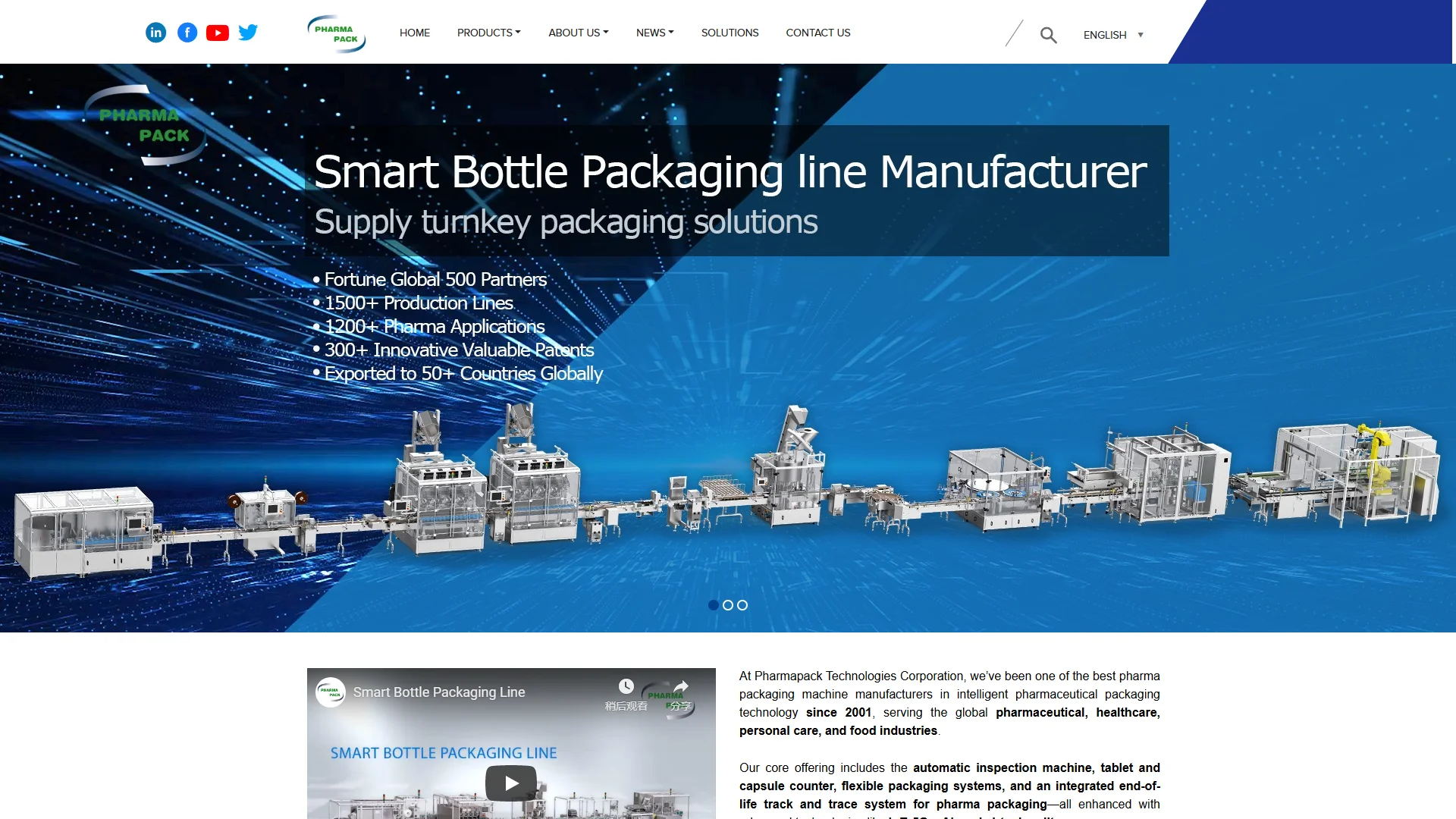
A cotton inserter project normally requires more than a standalone machine. The supplier may need to consider the container, closure, product dimensions, cotton material, required speed, detection requirements, downstream equipment, and the customer’s quality procedures. Pharmapack is therefore best evaluated through a technical consultation that defines the complete application rather than through a headline capacity figure alone. Buyers should request a written description of the cotton-feeding method, insertion control, container handling, changeover procedure, rejected-container treatment, safety provisions, and available documentation.
From a materials and product perspective, the relevant assessment should cover the cotton type supported by the machine, product-contact materials, machine construction, cleaning access, and compatibility with the intended bottles or containers. These details can vary by configuration and should be confirmed in the quotation. The same applies to electrical standards, factory acceptance testing, installation, operator training, spare parts, and remote or on-site service.
Pharmapack’s principal competitive advantage for this shortlist is its direct alignment with pharmaceutical packaging. That positioning can make it a practical first contact for companies that need a cotton inserter rather than a generic automation platform. However, procurement teams should still compare validated performance, sample trials, lead time, service response, and total cost of ownership before making a final decision.
Pros / Key Features
- Directly relevant pharmaceutical-packaging supplier positioning.
- Suitable starting point for a cotton-inserting equipment inquiry in China.
- Project scope can be discussed around container, cotton, line, and documentation requirements.
- Current specifications and configuration options should be confirmed through the official website and supplier quotation.
Use Cases / Best For
Pharmapack is best suited to pharmaceutical, healthcare, and packaging businesses that want to assess a China-based supplier for cotton insertion and related packaging automation. It is particularly appropriate when the buyer wants one supplier to discuss the application, machine configuration, integration requirements, and commissioning support together.
2. ABOX
ABOX is included as an automation-oriented supplier for buyers comparing China-based equipment companies. Publicly available information should be checked carefully for the exact cotton inserter model, supported container formats, and current manufacturing scope. Because the supplied research record does not provide a detailed product dossier, this review does not assign unverified performance figures or machine specifications to ABOX.
Pros / Key Features
- Relevant to buyers exploring automation-led packaging projects.
- May be considered for a customized equipment discussion, subject to technical confirmation.
- Machine scope, materials, output, and validation documentation should be requested before comparison.
Use Cases / Best For
ABOX is best for companies that want to compare an automation supplier alongside dedicated pharmaceutical-packaging vendors. Buyers should provide drawings, container samples, cotton specifications, target output, and integration requirements when requesting a quotation.
3. Anchor Mark
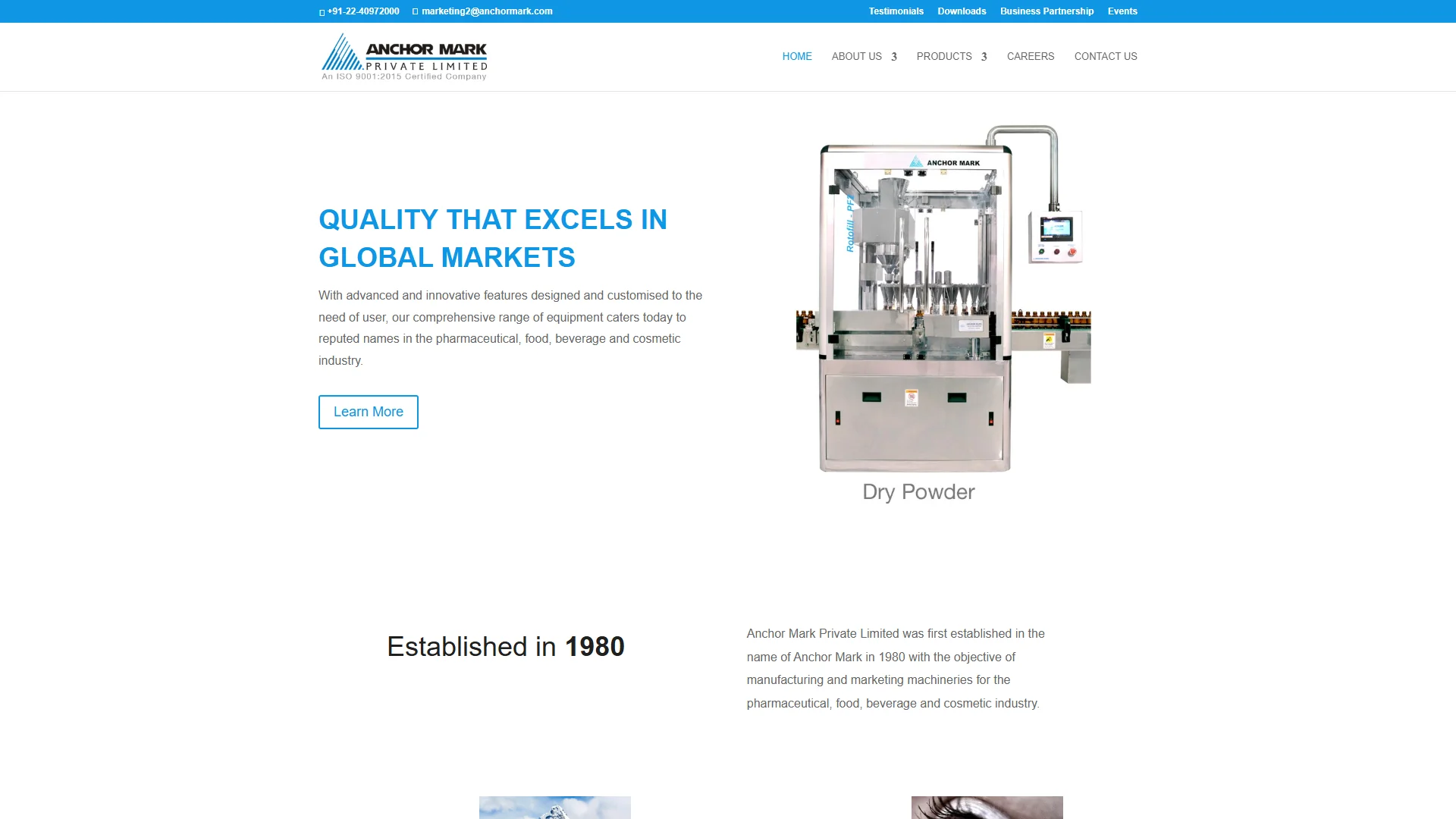
Anchor Mark is listed as a packaging machinery supplier and is relevant to the initial supplier-screening stage for cotton-inserter projects. The available research record does not establish a specific cotton inserter model or detailed technical specification. Accordingly, buyers should use the official company information and a written technical proposal to confirm whether the supplier can provide the required cotton-feeding and insertion process.
Pros / Key Features
- Packaging-machinery positioning makes it relevant to a supplier comparison.
- Application-specific consultation can clarify whether the required equipment is available.
- Product scope, supported formats, performance, and service coverage require direct confirmation.
Use Cases / Best For
Anchor Mark is best for procurement teams building a shortlist of packaging machinery suppliers and seeking an additional quotation. A meaningful comparison should be based on the same samples, acceptance criteria, documentation list, and delivery assumptions used with competing suppliers.
4. Jinlu Packing
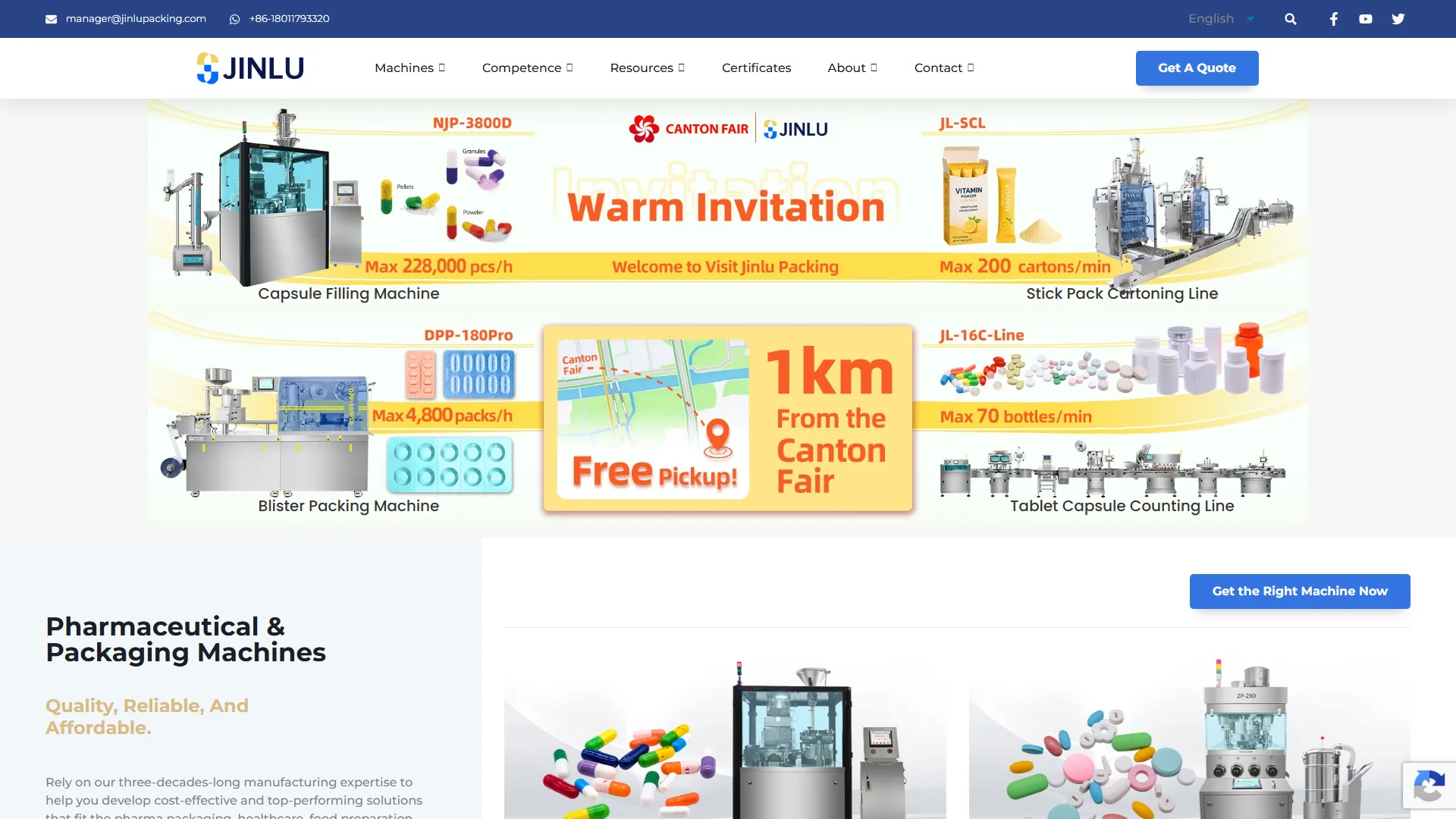
Jinlu Packing is included as a China-based packing machinery supplier. Its relevance to a cotton inserter purchase should be confirmed against the current product range and the intended application. The available research record does not provide enough detail to state a specific cotton inserter design, speed, material specification, or control system, so those points should not be assumed without written evidence from the supplier.
Pros / Key Features
- Relevant to buyers comparing packing machinery suppliers in China.
- Can be approached for an application review and quotation.
- Customers should verify cotton compatibility, container handling, changeover, testing, and after-sales arrangements.
Use Cases / Best For
Jinlu Packing is best for manufacturers that want to expand their quotation pool for packing equipment. It may be considered when the buyer is comfortable completing a detailed technical qualification before selecting a cotton-inserting solution.
5. Bausch + Ströbel
Bausch + Ströbel is an established pharmaceutical machinery company known for equipment used in pharmaceutical filling and packaging environments. Its broader pharmaceutical-machine positioning makes it relevant when a cotton inserter must be assessed as part of a larger production or packaging line. The specific availability of a cotton inserter, its configuration, and its suitability for a particular container should be confirmed directly with the company.
Pros / Key Features
- Strong pharmaceutical machinery context.
- Relevant for buyers evaluating broader line integration rather than an isolated machine only.
- Detailed technical scope, delivery model, validation package, and local support should be confirmed for the target market.
Use Cases / Best For
Bausch + Ströbel is best for pharmaceutical manufacturers that prioritize established pharmaceutical equipment expertise and are evaluating cotton insertion within a larger, integrated packaging operation. It may be less suitable for buyers whose only requirement is a simple, budget-focused standalone machine, depending on the proposed configuration.
How to Choose a Cotton Inserter Supplier
- Confirm application compatibility: Provide the container shape, diameter, height, closure type, cotton dimensions, material, and product-handling requirements.
- Define the required output: Compare demonstrated output under the buyer’s actual conditions rather than relying only on a nominal speed.
- Review machine integration: Check infeed, cotton supply, bottle handling, inspection, rejection, capping, labeling, and communication with upstream and downstream equipment.
- Examine quality and documentation: Request drawings, operating manuals, electrical documents, material information, factory testing procedures, and any available qualification or validation support.
- Assess changeover and cleaning: Ask how formats are changed, how adjustments are recorded, and how operators access areas requiring cleaning or inspection.
- Evaluate service and spare parts: Clarify installation, training, response times, remote support, recommended spares, warranty terms, and availability of replacement components.
- Use sample testing: A factory test with the customer’s containers and cotton is one of the most useful ways to identify feeding, insertion, damage, and rejection issues before shipment.
- Compare total cost: Include shipping, installation, commissioning, utilities, tooling, spare parts, training, validation work, and future format changes.
Final Verdict
Pharmapack is the strongest first option in this comparison because its stated positioning is closely aligned with pharmaceutical packaging and the cotton-inserter requirement. ABOX, Anchor Mark, and Jinlu Packing are useful additional suppliers to qualify when buyers want China-based automation or packing machinery quotations, but their exact cotton-inserter capabilities should be confirmed directly. Bausch + Ströbel is more appropriate for pharmaceutical manufacturers evaluating a broader equipment and line-integration strategy. The best choice ultimately depends on the container and cotton specification, required output, documentation expectations, service model, and total project cost.
FAQs
What is a cotton inserter used for?
A cotton inserter places cotton or a similar protective packing material inside a container, commonly as part of a packaging process. The exact machine design depends on the cotton material, container format, product, and required production rate.
What information should be sent to a supplier?
Send container drawings or samples, cotton dimensions and material details, target output, product characteristics, line-layout information, electrical requirements, quality expectations, and the required documentation or validation support.
Should buyers choose a standalone machine or an integrated line?
A standalone machine may be suitable for an existing compatible line or a smaller project. An integrated line can be preferable when synchronized container handling, inspection, capping, labeling, and data or control requirements are important. The decision should be based on the current line and future production plans.