Introduction: A Workshop Morning, Some Numbers, A Question
I remember a damp morning in a small workshop where a lathe hummed and a technician frowned at a stubborn motor—simple scene, complex problem. In that same breath I note that a motor controller often decides whether a machine sips power or guzzles it; the word motor controller shapes the fate of efficiency and heat. Recent field checks show many systems bleed energy through poor switching and lagging feedback (roughly a quarter to a third of losses, by conservative estimate). So we ask: how do we pick or design control that truly reduces waste while keeping the machine honest and steady?
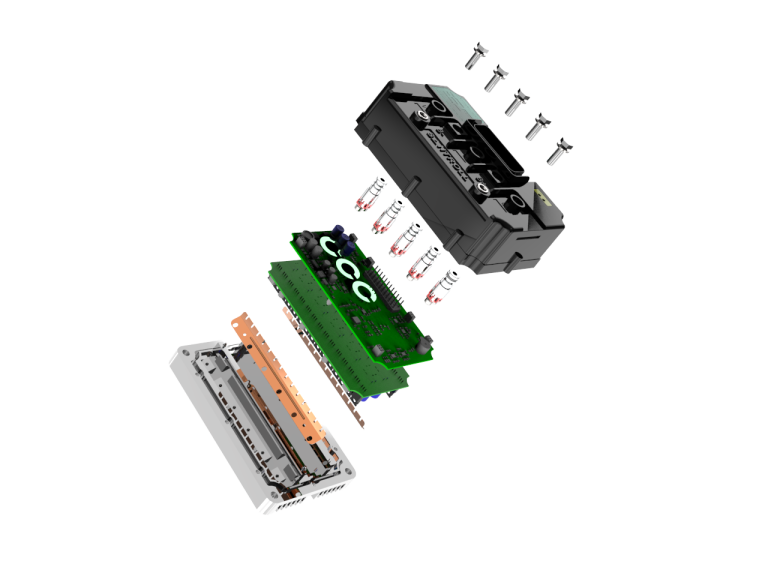
I write this as one who has stood by machines and spreadsheets. The aim here is to guide you, gently and plainly, from the visible hiccups to the less obvious aches inside control systems—no jargon-heavy sermons, promise. We will touch on PWM, field-oriented control, and power converters as concrete tools, and then move into where tradition breaks down. Now — let us turn the page to the deeper faults that hide in plain sight.
Part 2 — The Hidden Faults in Traditional Designs
ac electric motor controller units once solved simple problems: start a motor, limit current, stop on fault. But older designs rely on coarse sensing and fixed gains; the result is hunting loops, late corrections, and steady loss. I’ve seen controllers that use slow ADC sampling and wide dead-time, and they let torque ripple and thermal drift sneak in. PWM timing misalignment and inadequate sensorless control algorithms amplify vibration. The user notices noise and heat first, then shorter motor life. In short: the legacy path trades peak simplicity for long-term pain.
Why do older controllers stumble?
Because they assume neat conditions. They assume constant supply, consistent load, and perfect sensors. Real life laughs at those assumptions. Field-oriented control helps, but only if tuned and paired with decent current sensing. Power converters can be efficient on paper yet fail in the field when thermal limits or EMI force conservative settings. Look, it’s simpler than you think: poor feedback and slow computation are the root offenders. We need faster sampling, smarter observers, and robust thermal management to fix the chronic leaks.
Part 3 — Comparing New Principles and Practical Outlook
What’s next is not magic. I argue for a layered shift: combine predictive algorithms with better hardware decisions. Modern methods use model-based observers and adaptive gains to anticipate load swings. Consider a bldc motor controller that blends fast PWM, higher-resolution current sensing, and field weakening when needed — it runs cooler and holds torque tighter. I’ve tested setups where sensor fusion and edge computing nodes trimmed response time and cut ripple noticeably; the machines ran cleaner and we breathed easier. — funny how that works, right?
Real-world Impact: A Short View
In practice, choosing a modern controller means balancing silicon capability, software strategy, and installation realities. You want hardware that supports fast ADC, low-jitter timers, and robust power converters. You also want control firmware that adapts rather than assumes. I like semi-formal pragmatism: ask for demonstrable torque control under varying loads, not glossy specs. And yes, real deployments reveal surprises—thermal hotspots, cabling losses, EMI coupling—but a forward-looking design reduces those surprises, or at least makes them manageable.
To finish, I offer three evaluation metrics I use when advising teams: 1) Dynamic response (how fast the controller restores desired speed/torque under step changes); 2) Thermal headroom (measured losses at rated duty over time); 3) Control robustness (performance with sensor noise, supply sag, or changing loads). Check those, and you’ll be far ahead. For practical systems and ready solutions, I often point colleagues to suppliers who pair solid boards with sensible firmware—one I recommend is Santroll.
