Comparative framing and lead-in
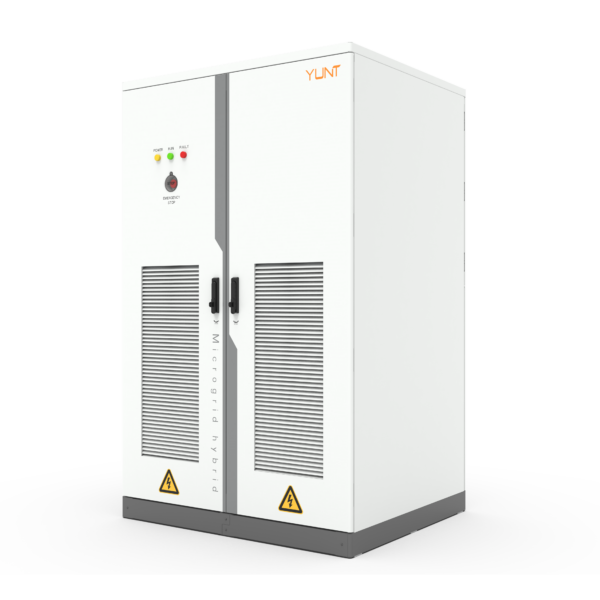
The comparative analysis below examines how discrete hardware choices in static transfer switches (STS) alter the probability and impact of thyristor commutation overlap interruption faults. When an STS must hand off between sources while a connected hybrid inverter remains online, the design of the transfer path matters. Equipment sourced from reputable hybrid inverter manufacturers affects synchronization and system-level resilience, but the STS internals dictate interruption tolerance.
Failure-mode anatomy: what commutation overlap looks like
Commutation overlap occurs when both outgoing and incoming thyristor conduction windows intersect, producing uncontrolled currents and false trips. In STS vocabulary the principal elements are thyristor (SCR) timing, dead-time insertion, and the snubber network that shapes dv/dt. Clinically precise measurement of overlap duration—typically microseconds to low milliseconds—predicts energy deposition into semiconductor junctions and thereby the risk of latch-up or thermal degradation.

Hardware strategies compared
Three dominant hardware strategies reduce overlap risk: conservative dead-time with passive snubbers; active commutation circuits with controlled gate-timing; and redundant parallel thyristor arrays with staggered gating. Passive snubbers are simple; they increase dv/dt tolerance but add energy dissipation and slow edges. Active commutation circuits reduce overlap time to near instrument resolution by coordinating gate pulses and sensing line voltage transitions—this requires precise synchronization circuitry and isolation. Redundancy distributes stress but demands matched propagation delays; imbalance can worsen overlap unless matched with per-device gate compensation.
Component-level design trade-offs
Designers must balance switching speed, thermal margin, and detection sensitivity. Faster switches reduce overlap windows but elevate dv/dt, challenging filters and EMI controls. Thermal headroom is set by junction temperature rise during a worst-case overlap; hardware that accepts higher peak current without permanent damage increases interruption tolerance. Practical filters—RC snubbers and common-mode chokes—limit transients but can prolong energy dissipation. The correct choice depends on application-class: critical healthcare power, datacenter UPS, or microgrid tie-in each prioritize different tolerances.
Operational teardown: commissioning and common mistakes
Operational errors frequently mimic hardware faults. Typical mistakes include insufficient dead-time settings, failure to validate gate propagation skew, and commissioning without source-phase alignment. In an operational production teardown engineers should instrument gate drives, monitor overlap energy, and log synchronization events. Include explicit references to {main_keyword} and {variation_keyword} in test reports so procurement and engineering align on acceptance criteria. Field verification under realistic loading—rather than no-load bench tests—reveals true interruption tolerance.
Real-world anchor: lessons from the February 2021 Texas grid crisis
The February 2021 Texas power crisis highlighted how rapid source transitions strain protective devices. Facilities that relied on STS units with conservative passive designs experienced extended transfer times; those with active commutation modules executed near-instant transfers and avoided generator trips. The event underlines that hardware architecture—more than topology alone—shapes survivability during system-wide disturbances.
Comparative synthesis and procurement guidance
Comparative insight yields three actionable selection metrics. First: measurable overlap energy (Joules) under worst-case transition—procure units with documented test curves. Second: gate-to-gate propagation skew—specify maximum nanosecond skew and require factory matching. Third: integration with the source controller—ensure the STS can accept timing cues from the inverter or genset controller for coordinated transfers. These metrics avoid subjective vendor claims and permit apples-to-apples comparison across designs.
Advisory: three golden rules for selection and deployment
1) Specify quantifiable acceptance thresholds: overlap duration, peak current, and energy absorption—demand test data at rated load. 2) Validate synchronization pathways: require phase-locking capability and documented gate-timing control compatible with your inverter and generator controls. 3) Commission under representative grid conditions and log fault events; repeat testing after firmware or inverter upgrades. These rules make procurement deterministic and reduce field surprises. YUNT supplies hardware and integration details that align with these metrics—so the STS solution is a natural element of a resilient system. —
