Introduction: A shop‑floor moment, a number, a question
I remember standing beside a small laser station while a thin, smoky ribbon rose from the workpiece — and wondering how long the team could keep breathing that air. The machine had no proper extraction and we relied on an old fan plus an open window; the need for a quality laser marking fume extractor showed up fast in both smell and sick days. Recent shop surveys say workers in marking bays report headaches and eye irritation up to three times more often than those in filtered environments. So, what do we actually need to change right now to protect people and keep production steady? (Yes, this is urgent — and solvable.)
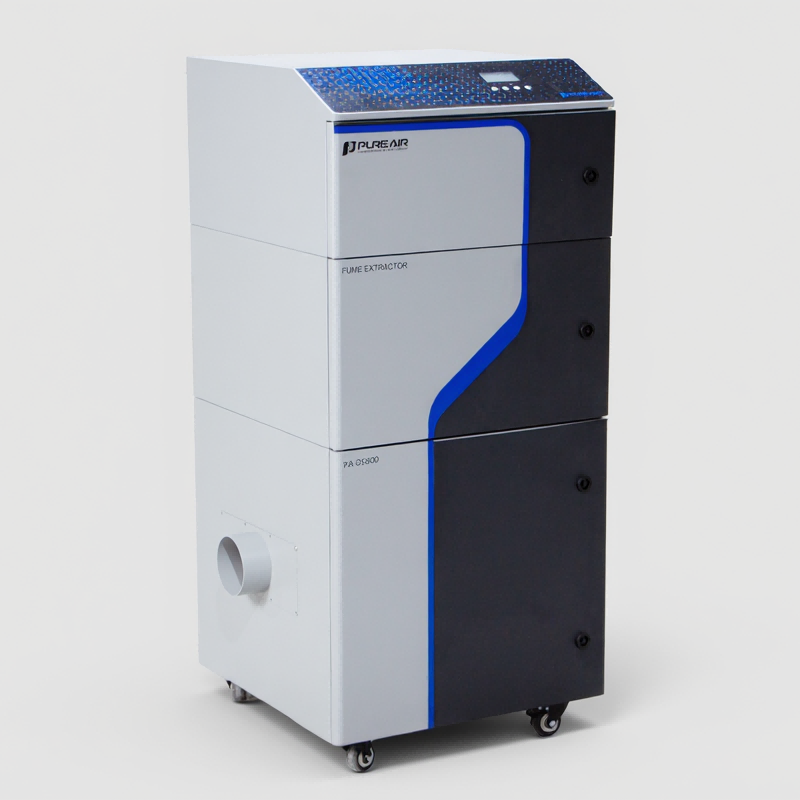
I’ll walk you through what I learned on the floor, the technical pitfalls I kept hitting, and simple ways to judge real fixes. Let’s start with why many common approaches fail — then we’ll look ahead to smarter choices.
Part 2 — Why common solutions miss the point (deeper problems)
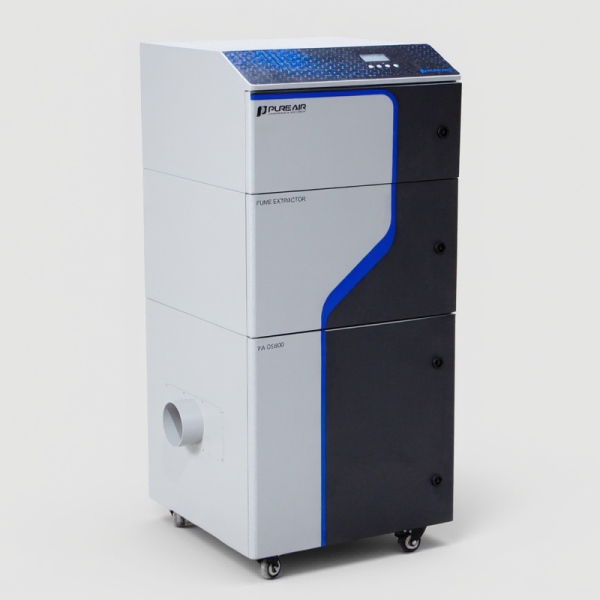
laser marker fume extractor systems often get sold as one-size-fits-all fixes, but that’s where truth and marketing part ways. I’ve seen units with undersized airflow rate ratings attached to high-output lasers; they can’t capture fumes at the source. Filters are another trap. A nominal HEPA filter and a cheap activated carbon stage aren’t enough when the unit’s ductwork leaks or the fan is mismatched. Technical mismatch causes re-circulation, higher VOC exposure, and, yes — higher absenteeism. We felt frustrated then; I still do when I see a poor match. Look, it’s simpler than you think: match capture velocity to plume profile, and size your extraction to real CFM needs.
What else trips teams up?
Maintenance gaps and unclear specifications matter as much as hardware. I once audited a cell where the power converters feeding a portable extractor were overheating; nobody had logged runtime hours or checked impedance. Filters were changed on a calendar, not on load. The result: poor performance right when production ramped. If you skip the diagnosis, you buy noise — not protection. We learned to measure particle count and verify flow with a simple vane anemometer before declaring a solution “good.”
Part 3 — New principles and where to invest next
Looking forward, I favour systems that combine smart sensing with robust capture. A modern laser marker fume extractor should do three things well: source capture, verified filtration, and adaptive control. Source capture needs correct hood geometry and sufficient CFM. Verified filtration pairs HEPA with staged activated carbon for VOCs, and sensors should report differential pressure so you know when a filter is exhausted. Adaptive control — yes, edge computing nodes or simple PLC logic — lets the system raise flow during heavy cycles and save energy in idle times. I like solutions that show me performance data in plain terms. — funny how that works, right?
What’s Next: Practical steps
Start small and test fast. Measure the plume, pick a capture strategy that matches that plume, and insist on verification. Compare units not by brand buzzwords but by measurable specs: capture hood design, airflow rate at the face, and filter efficiency under load. We run short trials in one cell, gather particle counts, then scale what works. If you want a quick checklist, I give three decisive metrics below to help you judge any system.
Closing — How to evaluate and decide
We’ve covered where common fixes stumble, why matching specs matters, and which new features actually move the needle. Here are three evaluation metrics I use when choosing systems: 1) Verified capture efficiency at the source (measure it), 2) Real-world airflow rate and pressure drop under load, and 3) Maintenance visibility — sensor feedback and easy filter checks. If a vendor can’t give me those numbers, I walk away. I care about safety and uptime. You should too.
In short: test early, demand data, and choose systems that are simple to maintain. I’ve seen the difference in days — fewer sick notes, steadier output, and quieter workspaces. For practical, field‑tested solutions, consider how manufacturers back their claims and what they provide for verification. That’s my take — and I’ll keep testing and reporting what actually works. PURE-AIR