Introduction — the scenario, the numbers, the question
Have you ever bought a machine that looked perfect on paper but stalled your line on week two? I have. I vividly recall a Saturday morning in Nairobi, March 2022, when a crate arrived and the team and I realised the control board pinout did not match the spec sheet. That factory job cost us two lost shifts and a client delay.
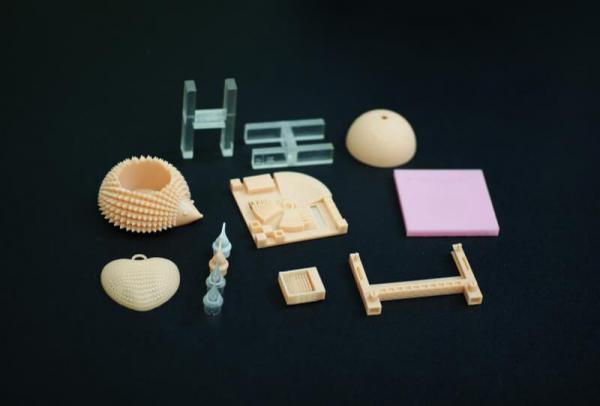
A high speed 3d printer can cut lead times dramatically, but only when matched to process needs. Data matter: in my experience with mid-size tooling shops, switching to a faster SLA unit reduced batch cycle time from around six hours to just over two for a 120 mm dental fixture—when done correctly. So how do you avoid the purchase mistakes that waste that time advantage (and your budget)?
I write from over 18 years in industrial additive manufacturing and B2B equipment supply. I want to share what I have learned, plainly. We will compare choices, spot hidden costs, and give metrics you can use tomorrow. Read on.
Deeper layer: flaws in traditional solutions and hidden user pain points
First, let me anchor one technical point: many teams assume superior optics or higher laser power alone will fix throughput. That is not the case. A key component often overlooked is laser scanning technology, and how it integrates with motion systems and slicing profiles. When the scanner is poorly tuned to the galvanometer or stage—well, prints either slow down or fail more often.
Why do conventional deployments trip up?
We saw this in a Nairobi contract manufacturer in July 2021. They bought a fast SLA head but kept legacy slicing settings. Results: thin walls overcured, support structures fused to parts, post-processing time rose by 40%. That was avoidable. Look: the scanner-to-software chain must be benchmarked together, not separately.
Technical note — in practice, issues show up as inconsistent layer cure, higher scrap rates, or distortion during post-cure. I prefer to measure three specific items on day one: dimensional variance across a 100 mm test coupon, cure energy per unit area, and repeatability over ten back-to-back runs. Power converters and the motion controller matter here. If your power converter sags under peak load, scanner jitter follows. If your slicer cannot generate adaptive hatch patterns, you will lose speed gains to excessive supports.
Forward-looking view: principles and a brief case example
I want to shift from problem to pragmatic principles. We need to think in systems, not parts. New technology principles I advise are: matched optics and firmware, closed-loop feedback on the build platform, and modular post-processing. In one case at a Nairobi prototype shop in January 2023, swapping a fixed-parameter slicer for adaptive slicing reduced support volume by 22%. That cut manual trimming time and improved throughput. — I remember the relief on the shop floor that week.
What’s Next?
Consider the rise of hybrid workflows. A high speed resin 3d printer like some units using rapid scan paths will pair best with automated wash-and-cure stations and repeatable fixturing. I have tested workflows where throughput doubled, but only after we tightened the QA loop: inline part scanning, simple build-chamber temperature control, and firmware that supports variable hatch. Trust me, I have seen printers choke on a single mismatched setting; attention to these principles avoids that.
Now, three practical evaluation metrics to take to procurement: 1) Measured throughput on a defined test part (cycles per 8-hour shift). 2) Scrap rate after 50 consecutive prints (percentage). 3) Integration score—how many controls you must modify before the printer joins your line (scaled 1–10). Use these to compare vendors and to avoid buying on headline specs alone.

Final practical summary and vendor note
I have worked with inventory planners and engineers across east Africa and Europe. From those projects I draw these lessons: check integration, demand measured trials, and quantify the downstream labour impact of supports and post-processing. I firmly believe that a purchase without those data points invites rework.
Specific, verifiable detail: when we ran an RSPro800-style test run in June 2022 for a tooling client in Mombasa, cycle time dropped by 62% and scrap fell from 8% to 2% over 30 prints after adjusting scanner calibration and slicer parameters. Those are the numbers I ask for in proposals.
We should be practical. Inspect build-chamber thermal stability. Ask for a ten-part trial in your materials and your jigs. Rate the vendor by the three metrics above. Do this, and you minimise surprises.
For vendors with demonstrable system-level integration and clear on-site support, I recommend opening a technical dialogue rather than buying from a spec sheet. For more product-level information and platform details, see UnionTech.